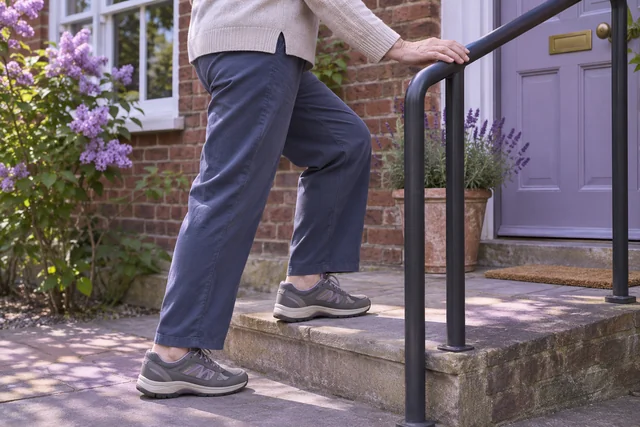
A long stretch at a desk can pass without much notice. The same can happen while travelling, reading or watching television. It helps to tie a movement break to an event you already recognise, such as reaching the end of a chapter, finishing a telephone call or getting up to make a drink.
Choose a break that matches the setting
The UK Chief Medical Officers advise interrupting prolonged sitting with light activity where possible. In practice, what you can do depends on the place and how you move. At home, there may be a clear path to the kitchen. At work, you might be able to wheel or walk to speak to a colleague. In a fixed seat, an available change of position may be the realistic option until you can move around.
Make a cue you will notice
- After a video call, leave enough time to move before opening the next one.
- When you refill a drink, take a route that is comfortable and free of obstacles.
- For an evening spent reading, choose a stopping point and place a bookmark there.
Experiment with one cue. A reminder can help if activities run together, but the useful reminder is the one you can act on. In a busy setting, attaching the break to a genuine pause can be simpler than setting repeated alarms.
Check how the break fits
At the end of a day, note when movement happened naturally. If a cue rarely led to a break, move it to an easier moment. Keep a short movement break distinct from your weekly activity plan. It has a purpose of its own, and it can sit alongside time for brisk movement and strength work.
Map the sitting you can change
Pick one recent day and mark two or three stretches when you were sitting for a long time. Write down what was happening before and after each stretch. Work, a journey and an evening at home can call for different arrangements. A reminder beside the screen helps only if you can pause the work. A different seat or a plan to move at the next stop may be the practical option while travelling.
Once you know where the long stretch is, ask which point in it has the fewest obstacles. A gap after a meeting may work because nobody is waiting for an answer. Another person may find that the best break happens before a task begins, when they can move without interrupting what they are doing. Choose a point with a clear trigger rather than relying on how much time it feels as if you have spent sitting.
Try a plan for three common settings
- At a desk. Leave a little room between two commitments. On a call that does not require you to read or type, consider whether a change of position is practical.
- While travelling. Look for an opportunity to move at a safe stop. The next stage of the journey may offer more room than the seat you are in.
- At home. Pick a natural break in the task. For example, a chapter ending or the start of preparing a meal may prompt a short change of activity.
Think about the available movement as well as the space. If you wheel rather than walk, check the route and make room to turn. If standing is difficult, a suitable change of position may fit while you plan an opportunity for other movement. Use any individual advice you have been given about moving safely.
Work around cues that keep failing
Suppose three alarms go off during calls. Moving all three alarms will still leave a problem if meetings continue to overrun. Try using the end of the first completed call rather than a fixed clock time. If that still fails because you need to take notes, use the moment you finish sending them. The change should make a break easier to fit; you can see whether it did in the next similar situation.
There may be another kind of obstacle. A path is blocked, the room is busy or you are concerned about tripping over cables. In that case the cue may have worked. Make the space more usable or choose a nearby alternative. Changing the route could be more effective than adding a reminder.
Keep a short record of what actually happened
Try recording one thing immediately after a break, such as the time or the task you paused. At the end of the day, see which breaks happened without extra planning. That tells you where routines already help. If you miss a break, note the reason without trying to make up the time or change everything the next day.
Consider this example. Tuesday had a walk to collect printing, but on Thursday the same break disappeared because you worked from home. Thursday might need a different cue, perhaps putting a mug away after making a drink. Two different setups can serve the same purpose.
Fit breaks alongside your broader activity plan
The UK guidelines distinguish limiting long sedentary periods from doing enough moderate activity and strengthening over the week. A short change in activity at work can be valuable in its own right. Keep space in the diary for a walk, an accessible class or another activity you want to do regularly as well. If both plans feel hard to manage, start by making one break and one separate activity easier to repeat.