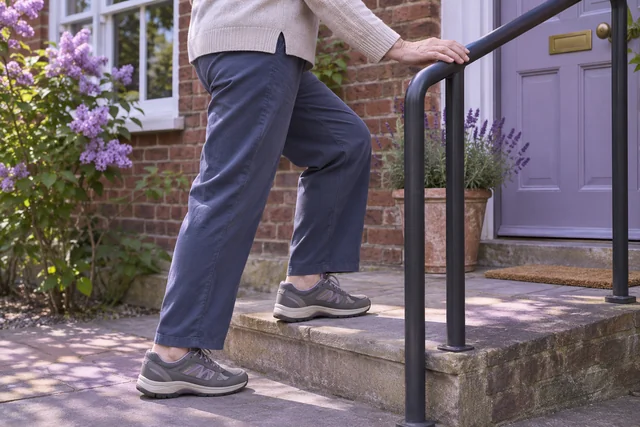
A pavement edge, an unexpected change in surface and a turn around a chair all place different demands on balance. UK guidance for older adults includes activities that improve strength, balance and flexibility on at least two days a week. Choosing a suitable environment makes it easier to give balance practice proper attention.
Look at the space first
Check the floor, footwear and space around you before trying a balance activity. The NHS provides examples using support, such as a stable chair or wall where appropriate. If an exercise guide calls for support, make sure it is within reach before you begin. An exercise can be easier to repeat when the setup stays the same.
Pick a way to take part
Some people prefer a class with a qualified instructor. Others use suitable supported activities at home. Consider whether a home activity involves an unfamiliar position or whether there is someone who can help you choose a safe starting point. A regular walk can be useful for general activity, while planned work on balance gives a separate skill room to improve.
- Choose a clear space with a surface that feels secure.
- Keep any prescribed walking aid or other support available as advised.
- Notice which movements feel uncertain and ask for advice before making them harder.
Ask for help when circumstances change
New unsteadiness, repeated falls or changes in mobility are useful things to discuss with a healthcare professional. Tell them what was happening at the time, including whether you were turning, using steps or on a particular surface. That information can make the conversation more useful than a general account of feeling less steady.
Identify the everyday situation you care about
It helps to name a specific action. For example, you may feel less steady when turning to speak to someone, when stepping around a chair or when moving between surfaces. Write down what makes the situation difficult. Is the route narrow, is it poorly lit or are you trying to carry something at the same time? Each detail suggests a different conversation about how to make it easier.
The aim of a balance activity at home can be to practise a movement in a suitable setting. Give yourself space to concentrate on it. An activity organised for practice may feel different from doing the same thing while answering the door or moving around other people. Keep the purpose clear when you choose how and where to take part.
Make the setup easy to check
Before beginning an activity described by a trusted guide, look at the type of support it calls for and where it is placed. A firm surface, suitable shoes and enough clear space to use the support are useful details to check. Keep walking aids or other supports you use as advised. Take the time to place anything you need before you start, rather than reaching for it after you have begun moving.
Imagine following an exercise description near a chair. If the chair moves when you lean on it, the setup is different from the stable support the guide describes. Change the chair or location first. The room may suit another activity on a different day. Keep a note of the feature that made it unsuitable rather than treating all home activity as the same.
Compare a class with an activity at home
A class can give you an opportunity to ask questions and get guidance on the setup. Ask who the session is designed for and whether it can be adapted to the way you move. Before attending, check practical things such as the approach to the room, the location of chairs and whether you can arrive with enough time to settle.
An activity at home offers control over the time and space. It can also be harder to judge a new movement without feedback. If you have been given individual exercises, follow the guidance on how to use support and which movements to practise. Tell the person advising you about the space you actually have; they may suggest a setup that fits it better.
Notice changes without turning them into a test
- Describe the position or movement you practised and the support you used.
- Record whether the environment let you do it comfortably and with control.
- Write down any uncertainty to discuss before changing the activity.
A short record can show a trend across familiar situations. One unusually difficult morning can have several explanations, such as a different floor or footwear. Save those details. A sequence of similar problems is useful to share, especially if you also notice changes in ordinary tasks around the home.
Bring recent examples to a health conversation
If you have been falling, feeling unsteady or changing how you move because of a concern, describe what has changed. A clinician can ask about movement, medicines and other possible contributors to falling, then discuss what assessment or activity suits you. You can bring a short account of one incident, the conditions around it and whether you had any support with you. That information gives the conversation a specific place to begin.
For instance, you might record that a particular turn feels less steady at the end of a long day and that carrying a bag affected it. Mention whether the same issue happens in several settings. Even without a complete explanation, the description is useful for deciding what to look at next.