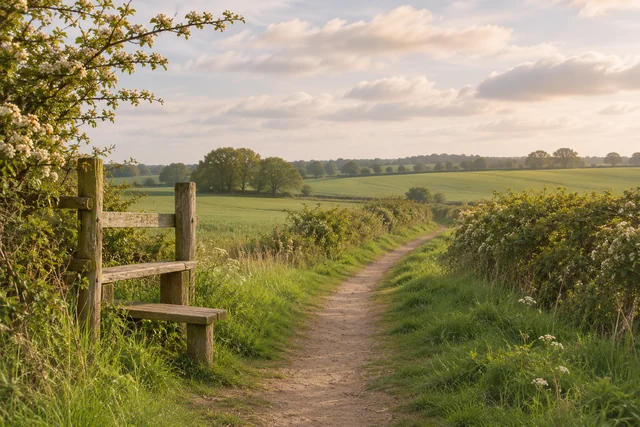
Choose a walk you can picture yourself doing again next week. That might be a short loop near home, a trip to the shops on foot, or a regular outing with a friend. A route with a clear turning point makes it easy to adapt the distance when time, energy or the weather changes.
Start from your current level
The UK Chief Medical Officers advise adults to build towards at least 150 minutes of moderate activity or 75 minutes of vigorous activity each week, or a mixture. They also advise strengthening the major muscle groups on at least two days a week and breaking up long stretches of sitting. Short periods of movement count. The weekly figure is a population guideline, and a smaller amount can be a useful starting point.
Moderate activity raises your breathing rate. During a brisk walk, the NHS suggests a simple check. You should generally be able to talk, while singing would be difficult. An easier pace can suit a first outing or a low-energy day. If you have a health condition, a concern about exercise or a long break from activity, follow the NHS advice to speak to your GP before starting.
Make the next outing easy to plan
- Choose a prompt you already have. Put a short walk after an existing part of the day, such as lunch or getting off the bus.
- Check the surface and a way back. Consider pavement gaps, benches, stiles, gradients and crossings. A route you can shorten is easier to repeat.
- Change one thing at a time. Once the current outing feels manageable, you might extend one walk, add another day or include a brief brisk section.
Record what made an outing easy to repeat. A note about footwear, a sheltered route or the time you felt most comfortable can be more useful to your next outing than a total on its own. Choose an indoor option or another form of movement if the available routes are unsuitable.
An Essex history detour
Essex Highways dates the Essex Way to 1972 and describes its route from Epping station to the Old Lighthouse at Harwich. Its Epping and Theydon Bois guide points out the waymark with two red poppies. On a short outing, look for a waymark near a suitable public path and stop to read it. That gives you a small piece of local history to bring back from the walk.
Use the published guide as a starting point and check the current Essex Highways map for diversions or closures before setting off. Path conditions and access can vary, especially where a route includes a stile or uneven ground.
Try a week with three different kinds of day
Build a plan for an ordinary day, a crowded day and a day when you have more freedom. On an ordinary day, you might use the same local loop after lunch. On a crowded day, the available activity may be part of an existing errand. On a free day, you can choose a route with a view or someone to walk with. This leaves a place for movement even when the first plan does not fit.
For example, imagine that a bus journey leaves you with two possible stops near home. Check which has a usable pavement and a crossing you are happy to use. Start there on a day with enough time. If the route is awkward in darkness, keep the daytime option and choose a different activity for evenings. You have learned something about a condition that makes the walk work.
Plan time for pace as well as distance
A short walk can include a period at a pace you can sustain and an easier stretch where the route demands concentration. A hill, wind or uneven surface can change the effort at the same speed. The NHS talk test gives you a way to check the effort on the day. Plan enough time for crossings or pauses, so the need to arrive by a deadline does not set the pace.
When you walk with somebody else, agree on a point to meet or turn back and make room for different speeds. If one person wants an extended route, the shared part can still be short. For a walk that combines a history stop with moderate activity, treat time spent looking at a building or picture as its own part of the visit.
Keep the habit when a route changes
- If a pavement is closed, check whether the signed alternative is usable. An obvious turning point may be preferable to an unplanned detour.
- If rain leaves an unsealed route muddy, choose a route with a surface you know or make another plan for movement.
- If an activity is easier with support, arrange that support before relying on the outing.
When something cancels a planned walk, record the actual obstacle in a few words. “No usable crossing” points to a different solution from “finished work late”. Change the part of the plan you can influence and leave the rest for a better day.
Look ahead using what happened this week
Check how many outings happened and which felt easy enough to repeat. If the same opportunity worked twice, put it in the following week again. Add time or another day only when the plan leaves room for it. If the most reliable outing is currently short, record what made it reliable. That is practical information you can use before choosing a bigger route.
One note to keep is the gap between the plan and the actual outing. A five-minute walk that happened regularly tells you something different from a long walk you managed once on holiday. Both have a place. If the aim is a routine, look for the situation you can set up again.