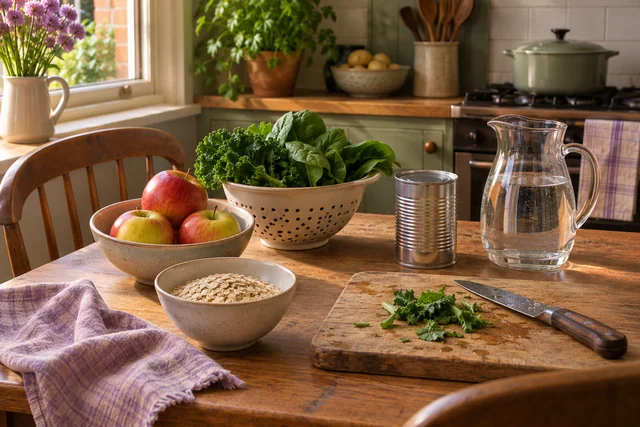
Start with meals you already know how to prepare. The NHS Eatwell Guide explains that a balanced pattern can build across a day or a week. Add up what you have over several occasions and look for a part of the pattern that is hard to fit in.
Look at a few ordinary meals
Write down what a normal breakfast, lunch and evening meal might include. Then check which meals give you opportunities for fruit or vegetables, higher-fibre starchy foods and sources of protein. The foods can be fresh, frozen or tinned as appropriate. A quick meal can still fit into a varied pattern.
Keep some adaptable ingredients
- A bag of frozen vegetables can be used with more than one meal.
- Beans or lentils can be added to a familiar dish or used in a meal of their own.
- Wholegrain bread or another higher-fibre starchy food can make a common lunch easier to vary.
For instance, the same lentils could go into a soup one day and a tomato-based meal another. Decide which options work with the time, equipment and budget you have. That choice will tell you more about what is likely to stay in the plan.
Review what was easy to repeat
At the end of the week, notice which foods you used and which you left untouched. Use that information to make the next shop less complicated. Individual eating advice can differ during treatment or with a medically prescribed diet, so use the plan your healthcare team has given you where it applies.
Map the meals you already rely on
Select two meals you can prepare nearly without thinking and one that regularly gets decided at the last minute. Write down their ingredients and the days they tend to happen. Then look at the overall week using the Eatwell Guide. Which food groups have a ready place in the meals? Where does variety usually drop out? The useful answer may be about timing or storage as much as the ingredients.
For instance, if lunch at work usually means bread and a filling, ask which choices fit the time you have to make it and the way you can store it. That lunch may be a reliable place to consider fruit, vegetables or a higher-fibre base. If it is difficult to adjust, another meal may give you a simpler point to start.
Keep one base and vary what goes with it
A week of meals does not require separate recipes for every day. Make a plan for a few ingredients you can use in different combinations. Potatoes, rice, bread or pasta may form the base of several meals. A pulse or vegetable can work with different flavours or methods of preparation. Choose options you actually enjoy and know how to use.
Imagine two evenings with different cooking time. On one day you could prepare a soup or a tomato-based meal with lentils. On the other you may use familiar food that takes less preparation. Consider how the ingredients can support both meals. If you intend to use leftovers, check that you have appropriate storage and reheating arrangements. A meal you can assemble from stored ingredients can be a useful alternative when preparing food ahead will be hard.
Choose three things that help a busy day
- Keep a short list of familiar meals suitable for the time and equipment you have.
- Use ingredients with more than one purpose, including options you can store between shopping trips.
- Think about how they fit the wider week, including vegetables, fruit, starchy foods and sources of protein.
A quick option may be especially useful when the day includes travel. Decide how you will take food with you or choose it while you are out. Plan for the actual access you have to shops, refrigeration or a place to eat. That decision can make it easier to use the option when the schedule is busy.
Compare the planned week with the one you had
Review which meals happened at roughly the planned time. Look at what was easy to put together, which ingredients you used and what you ended up eating instead. If a change failed because preparing the food took too long, consider another preparation method or put the change at a different meal. If a food regularly went unused, look for another way to include that part of the overall diet.
One useful question is whether an ingredient offered more than one opportunity for a balanced choice. Frozen vegetables, for instance, might have worked in two different meals, while the fresh version you planned needed more preparation. Your own record can tell you what helped in a normal week.
Apply individual advice to specific meals
For a prescribed diet, allergy or treatment need, discuss how individual guidance fits the meals you tend to have. Bring examples of a quick meal and a meal you have more time to prepare. If you have questions about a particular packet or ingredient, take the label with you. A specific example gives a clinician or dietitian a clearer picture of your cooking, budget and preferences.
You can also note where the plan is likely to be stretched, such as on a day with little preparation time. That helps the advice cover the week you actually have.